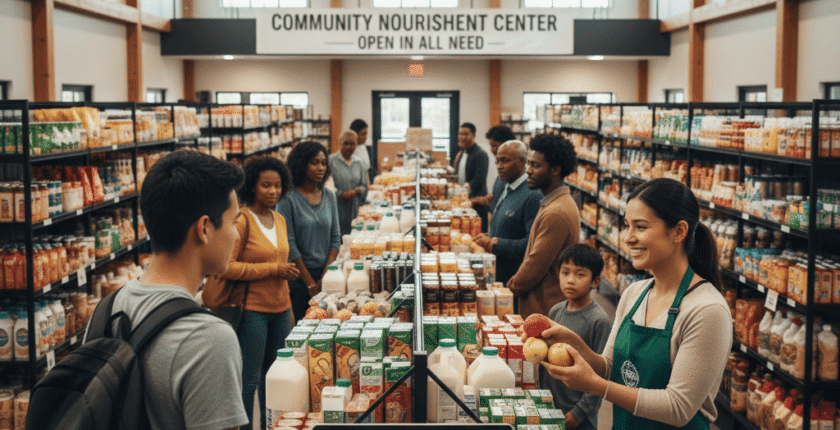
Imagine this: you’ve run out of food at home. Your fridge is empty, your pantry is bare, and you don’t have enough money to replenish them. Can anyone just walk into a food bank and ask for help?
Understanding the Role of Food Banks
A food bank is more than just a place where free groceries are distributed. Yes, it provides sustenance for people who can’t afford it. But it’s also a beacon of hope and a symbol of community solidarity in times of need. In the USA, food banks are crucial parts of the community’s safety net.
Eligibility Criteria for Food Bank Assistance
The question “Can anyone go to a food bank?” has no one-size-fits-all answer. Generally speaking, anyone in need can get aid from a food bank. However, specific criteria often depend on the policies set by each individual institution and their fund availability.
- Economic status: Most food banks primarily serve people below certain income thresholds.
- Geographical location: Some banks only serve residents of specific areas or communities.
- Situational needs: Certain circumstances such as natural disasters or unforeseen personal crises might also qualify individuals for assistance.
Different Types of Food Assistance Programs
In the USA, various types of food assistance programs exist alongside traditional food banks. These include soup kitchens offering hot meals and school meal programs providing nutritious lunches for children.

| Program Type | Description |
|---|---|
| Food Pantries | They distribute groceries to cook at home |
| Soup Kitchens | They provide hot meals on site |
| School Meal Programs | They offer lunch for students during school hours |
How to Access a Food Bank
Accessing a food bank usually involves some level of pre-screening. This can entail filling out an application form and providing documentation such as proof of address or income statements. After the screening process, individuals may receive their food items directly at the bank, through home delivery, or at designated distribution points.
- Locate your nearest food bank
- Contact them for information on their eligibility criteria
- If eligible, fill out the required forms and provide necessary documents
- Arrange a collection time or delivery option
The Social Impact of Food Banks
Food banks play a critical role in combating hunger and poverty. Not only do they provide immediate relief to people in need, but they also foster social cohesion by mobilizing communities around common causes.
Can anyone go to a food bank?
What kind of people use food banks?
Do I need to prove my financial status to use a food bank?
Are there different types of food assistance programs?
What are some alternatives if I don’t meet the criteria for a local food bank?
Can I donate to a food bank if I’m not in need?
What types of items do food banks need most?
Are there volunteer opportunities at food banks?
How can I locate my nearest food bank?
Is using a food bank something to be ashamed of?
In conclusion, while anyone in genuine need may seek assistance from a food bank, it’s always best to contact the organization directly for accurate information. Remember that asking for help when you need it isn’t a sign of weakness but an act of self-care.